

 Home
HomeElectronic Countermeasure
1、 Application of SAR in Electronic Warfare
The three major application areas of SAR in electronic warfare:Electronic Support (ESM), Electronic Attack (EA), and Electronic Protection (EP).
(1) Electronic Support - SAR as a High Value Battlefield Reconnaissance Sensor
The purpose of electronic support is to passively or actively perceive the enemy's electromagnetic environment, providing information for target positioning, threat warning, and interference guidance. SAR's main contribution in this stage is:
1. High resolution geographic intelligence and target positioning
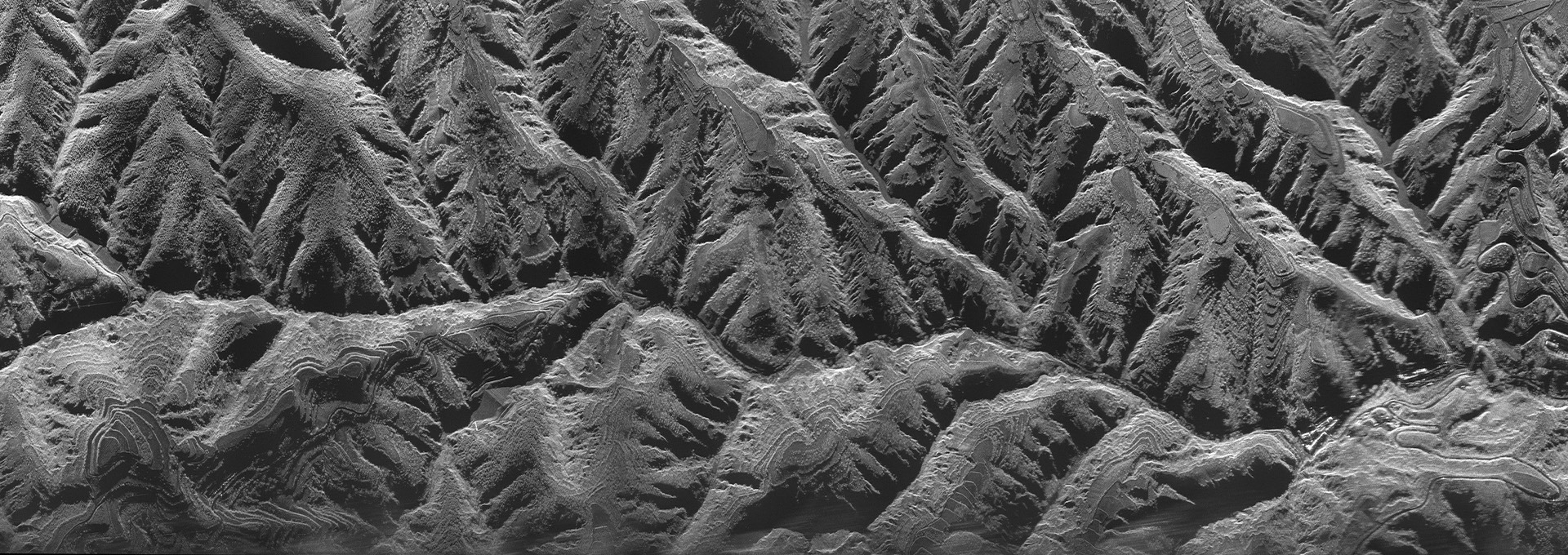
Traditional electronic reconnaissance, such as direction finding and time difference positioning, can only provide the azimuth and rough location of radar/communication transmission sources. SAR can accurately locate fixed targets such as enemy radar, command posts, missile launchers, communication antennas, etc. by actively emitting microwaves and imaging, obtaining maps with a resolution of meters or even sub meters. Comparing SAR images with electronic intelligence (ELINT) databases can achieve the goal of "targeting where you want".
2. Motion target indication and feature extraction
Multi channel SAR-GMTI (Ground Moving Target Indicator) can detect moving radar, jamming vehicles, missile transport vertical launch vehicles (TEL), etc. By inferring the type and operating mode of the target based on its radar cross section (RCS) changes and micro Doppler features (such as rotating antennas and vehicle engine vibrations), a basis is provided for selecting subsequent interference strategies.
3. Evaluation of the Effectiveness of Electromagnetic Warfare Operations
After implementing interference or hard destruction, SAR can fly over the target area for imaging, compare the changes in images before and after the attack, determine whether the enemy radar is turned off, relocated, or repaired, and form a closed-loop kill chain.
4. Passive detection mode
Modern SAR systems can also operate in passive reception mode, without transmitting signals, but using third-party radiation sources (such as communication satellites, broadcast towers) or even enemy radar signals for dual/multi base imaging, achieving covert reconnaissance.
(2) Electronic Attack - Interference with SAR and SAR as a Jammer
This section includes two aspects of 'attacks':Enemy interference with SAR and SAR as an interference source to attack enemy radar.
1. SAR as Electronic Attack Weapon (SAR-ECM)
(1) Coherent interference beamforming
By utilizing the multi-channel capability of phased array SAR, it is possible to generate both real imaging beams and multiple interference beams simultaneously. The interference beam points towards the enemy radar, emitting encoded false echoes to deceive its distance/angle tracking.
(2) Synthetic Aperture Interference (Spoof SAR)
Using intercepted enemy radar signals as illumination sources, the SAR platform forwards modulated signals, causing false synthetic aperture images to appear on the enemy radar screen, misleading the enemy commander.
(3) Distributed interference
Multiple small SAR satellites or drones collaborate to emit coherent interference from different directions, forming an overlapping "interference fence" in the airspace, blocking enemy radar from detecting real targets in the airspace.
(3) Electronic Protection - SAR's Anti Interference Technology
In order to ensure that SAR can still image normally in complex electromagnetic environments, various electronic protection measures must be taken:
1. Waveform design
High time bandwidth product signal:Reduce peak power and improve stealth when intercepting probability (low probability of interception, LPI).
Frequency hopping/random linear frequency modulation slope:Make it difficult for the enemy to intercept and match interference waveforms.
Phase coded waveform:Generate non matching processing losses for the jamming machine.
2. Anti interference in airspace
Adaptive beamforming:Using a multi-channel SAR antenna, a null is formed in the interference direction to suppress interference entering the main lobe and side lobes.
Side lobe cancellation/zeroing:The auxiliary antenna collects interference samples and subtracts interference components from the main antenna.
Multiphase center DPCA/ATI:Simultaneously implement GMTI and Spatial Adaptive Processing (STAP) to suppress ground/interference sources.
3. Time frequency domain and processing domain anti-interference
Rapid changes within/between veins:The jammer is difficult to predict the parameters of the next pulse and cannot generate coherent interference.
Distance door deviation and channel balance:Combat distance deception and interference.
Channel joint interference suppression algorithm:Utilize the statistical characteristics of echo and interference (such as subspace projection and blind source separation) to filter out interference.
4. Low Probability of Intercept (LPI) design
By using ultra-low sidelobe antennas, large time bandwidth product signals, and pseudo-random coding, it is difficult for enemy reconnaissance receivers to detect SAR signals and avoid interference from the source.