
 Home
HomeMilitary Reconnaissance
Synthetic Aperture Radar (SAR) has completely changed the passive situation of traditional military reconnaissance, which relies on lighting and is limited by weather, thanks to its unique technological advantages of all-weather, strong penetration, and multi-dimensional observation. It has become the core equipment for "battlefield situational awareness, target accurate positioning, and dynamic threat monitoring" in modern information warfare. From tactical single soldier equipment reconnaissance to strategic military facility monitoring, SAR has constructed a three-dimensional military reconnaissance system covering "air space ground" by combining different bands, resolutions, and polarization modes, providing real-time and reliable intelligence support for command decision-making.
1、 The core technological advantages of SAR empowering military reconnaissance
Compared to optical reconnaissance (such as satellite optical cameras, reconnaissance aircraft electro-optical pods) and infrared reconnaissance, SAR exhibits irreplaceable technical characteristics in military reconnaissance scenarios, which directly determine its application value in complex battlefield environments
1. Working 24/7: Breaking through environmental limitations
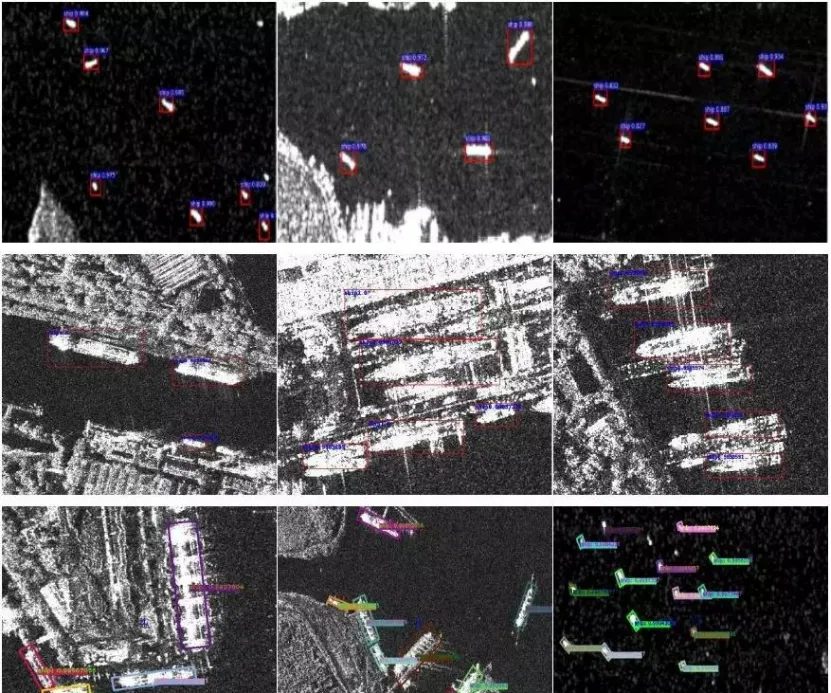
Military reconnaissance often needs to perform tasks in harsh environments (such as rainstorm, dense fog, sandstorm and night), while optical reconnaissance is significantly affected by light and weather, and infrared reconnaissance is easily interfered by smoke and clouds. SAR actively emits microwave signals and receives echoes, and signals in the microwave frequency band (wavelength 1mm~1m) can penetrate clouds, rain, snow, sand and dust, and are not affected by changes in daytime and nighttime illumination - for example, in typhoon weather, optical satellites cannot obtain ground images at all, while X-band SAR can still clearly identify the movements of warships in ports; At night on the battlefield, SAR can continuously track the maneuvering trajectory of tank units, achieving "24-hour uninterrupted monitoring".
2. Penetrating observation: identifying camouflage and concealment
Modern military targets commonly use camouflage measures (such as camouflage nets, vegetation cover, underground works) to evade reconnaissance, while SAR microwave signals can penetrate some media, achieving "target detection under surface camouflage":
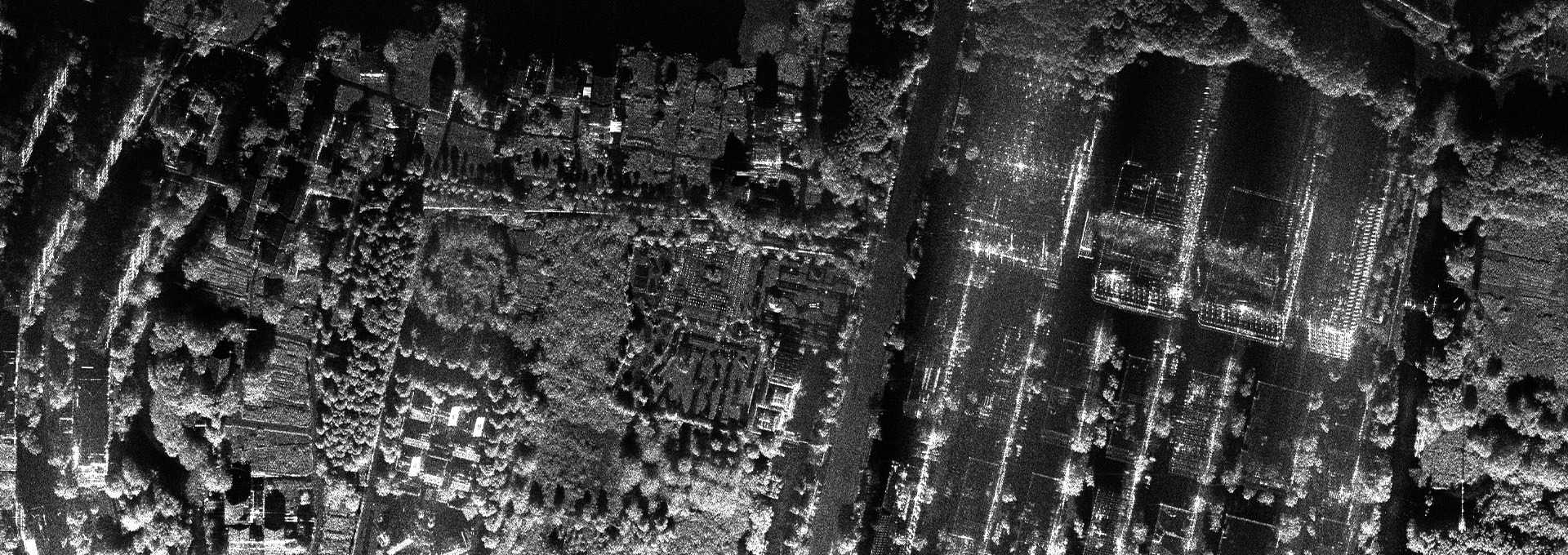
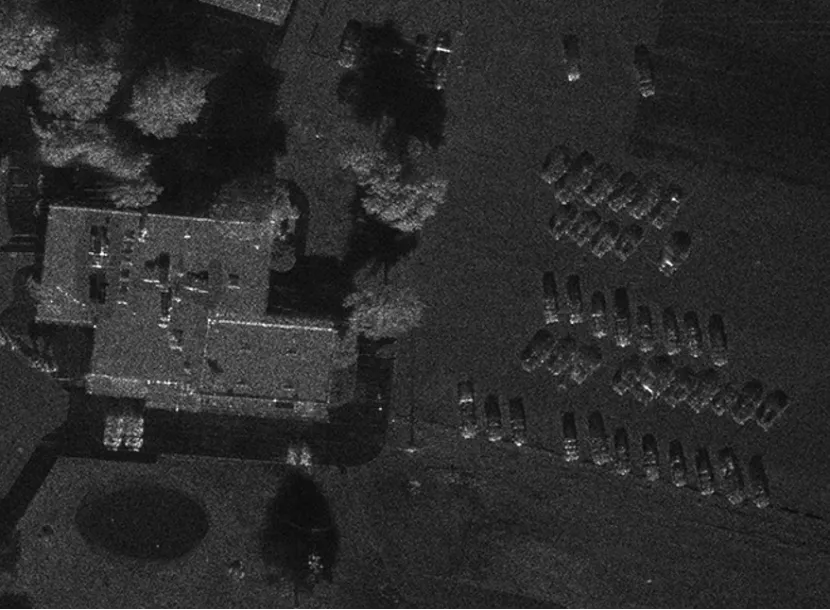
Vegetation penetration:L-band (wavelength 15~30cm) SAR can penetrate grass and shrubs up to 1-2m thick, and detect tanks and armored vehicles hidden in forests (vegetation branches and leaves produce "body scattering", while metal targets produce "strong surface scattering", forming a significant difference in SAR images);
Shallow penetration:P-band (wavelength 30-100cm) SAR can penetrate dry soil and ice layers, identify simple ammunition depots or tunnel entrances 5-10 meters deep underground, which is crucial for striking enemy concealed works.
3. Multi dimensional information acquisition: improving target recognition accuracy
SAR can obtain multi-dimensional information such as scattering characteristics, three-dimensional structures, and dynamic changes of targets through polarization mode (HH/SV/HV/VH), interferometric measurement (InSAR), and temporal observation techniques, far exceeding the limitations of "two-dimensional images" in optical reconnaissance:
Polarization difference:Metal targets (such as missile launchers) have high scattering intensity under HH polarization (σ ⁰ ≈ -5~0dB), while camouflage nets have weak scattering under HV polarization (σ ⁰ ≈ -20~-15dB). Through multi polarization comparison, "pseudo targets" can be quickly identified;
3D terrain:InSAR can generate a digital elevation model (DEM) of the target area, identifying the elevation differences between hidden defensive structures (such as trenches and bunkers) in the mountains and the surrounding terrain;
Dynamic tracking:By using time-series SAR images (such as repeated observations every 15 minutes), the target's movement speed (such as the direction of the convoy and the speed of the warship) can be calculated to achieve "dynamic threat warning".
4. Strong anti-interference ability: adaptable to complex electromagnetic environments
In military reconnaissance scenarios, the enemy often destroys reconnaissance equipment through electronic interference (such as microwave interference sources, corner reflectors), and SAR has strong anti-interference capabilities:
Anti active interference:Avoiding enemy interference signals through "frequency agility" (quickly switching operating frequencies), or using "multi band fusion" (such as using X/L bands at the same time) to ensure that at least one band is not interfered with;
Anti passive interference:Although corner reflectors can generate strong scattering signals, SAR can distinguish interference from real targets through "scattering source morphology analysis" (corner reflectors are regular point scattering, real targets are surface scattering), avoiding being misled.
2、 Challenges and Development Trends Faced by SAR Military Reconnaissance
Although SAR has become a core equipment in military reconnaissance, it still faces many challenges with the development of anti reconnaissance technologies such as stealth technology, electronic interference, and new camouflage. At the same time, SAR is also evolving towards higher precision, intelligence, and synergy
1. Existing challenges: Confrontation and technological bottlenecks
Difficulty in detecting stealth targets:Modern stealth fighter jets and warships significantly reduce microwave scattering intensity through "absorbing materials+exterior design" (the sigma ⁰ of stealth fighter jets can be as low as -30~-20dB, close to the level of background clutter). Traditional SAR is difficult to identify targets from clutter and requires higher sensitivity SAR systems;
Difficult to counteract complex electronic interference:The enemy can cover the SAR operating frequency band through "broadband interference sources" or deploy "distributed interference nodes" to form interference areas, resulting in a decrease in SAR image signal-to-noise ratio and target recognition rate;
Balance between high resolution and wide coverage:The observation range of high-resolution SAR (such as 0.5m) is small (with a single coverage of about 50km × 50km), making it difficult to meet the needs of large-scale battlefield monitoring; However, wide coverage SAR (such as 500km × 500km) has a low resolution (about 10-20m) and cannot recognize small targets (such as individual soldier equipment).
2. Future development direction: technological breakthroughs and capability upgrades
Ultra high resolution and ultra wide range collaboration: Through the "multi subarray synthetic aperture" technology, the observation capability of "0.1m high resolution+200km wide range" is achieved, taking into account both "fine recognition" and "wide area search". For example, a single observation can cover the entire battlefield and clearly identify the model of a single tank;
Multi band, fully polarized fusion reconnaissance: Combining P/L/C/X multi band (P-band penetrates underground, X-band high-resolution) and fully polarized (HH/VV/HV/VH) data, using deep learning algorithms (such as Transformer models) to fuse multidimensional features, improving the recognition accuracy of stealth and camouflage targets - for example, P-band SAR can detect the "weak scattering signal" of stealth targets, X-band SAR can capture their external details, and the fusion of the two achieves accurate recognition.