

 Home
HomePipeline Monitoring
1、 Why can SAR, especially the L-band, be used for leak detection?
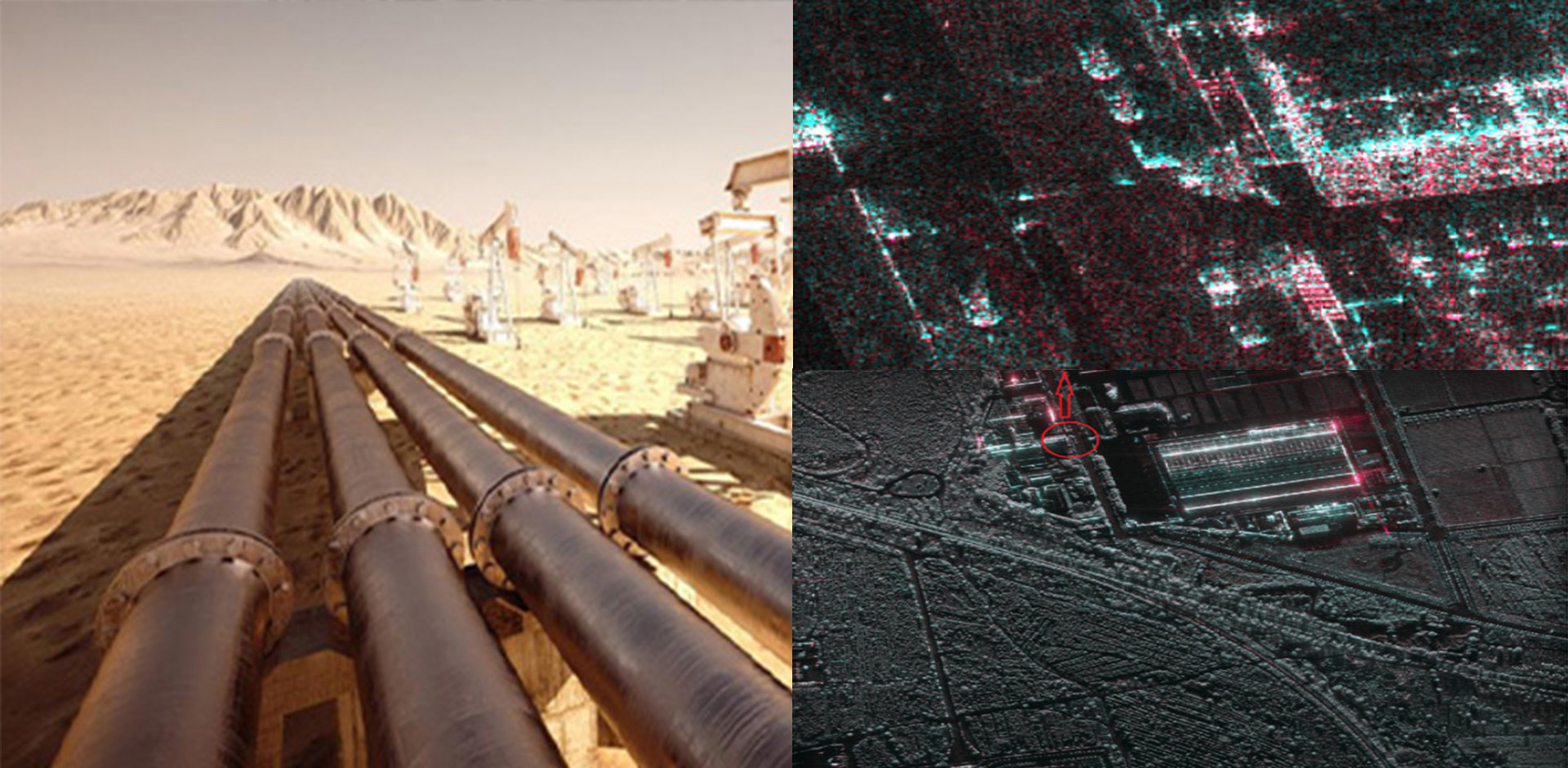
Traditional leak detection relies on manual inspection, pressure monitoring, or infrared detection, while SAR provides a large-scale, all-weather, high-precision surface deformation monitoring solution. The physical basis for its application in pipeline leak detection is:
Leakage causes surface deformation:Whether it's oil, natural gas, or water pipelines, high-pressure medium leaks can erode and infiltrate the surrounding soil, causing tiny elevations or settlements on the surface at the millimeter or even centimeter level.
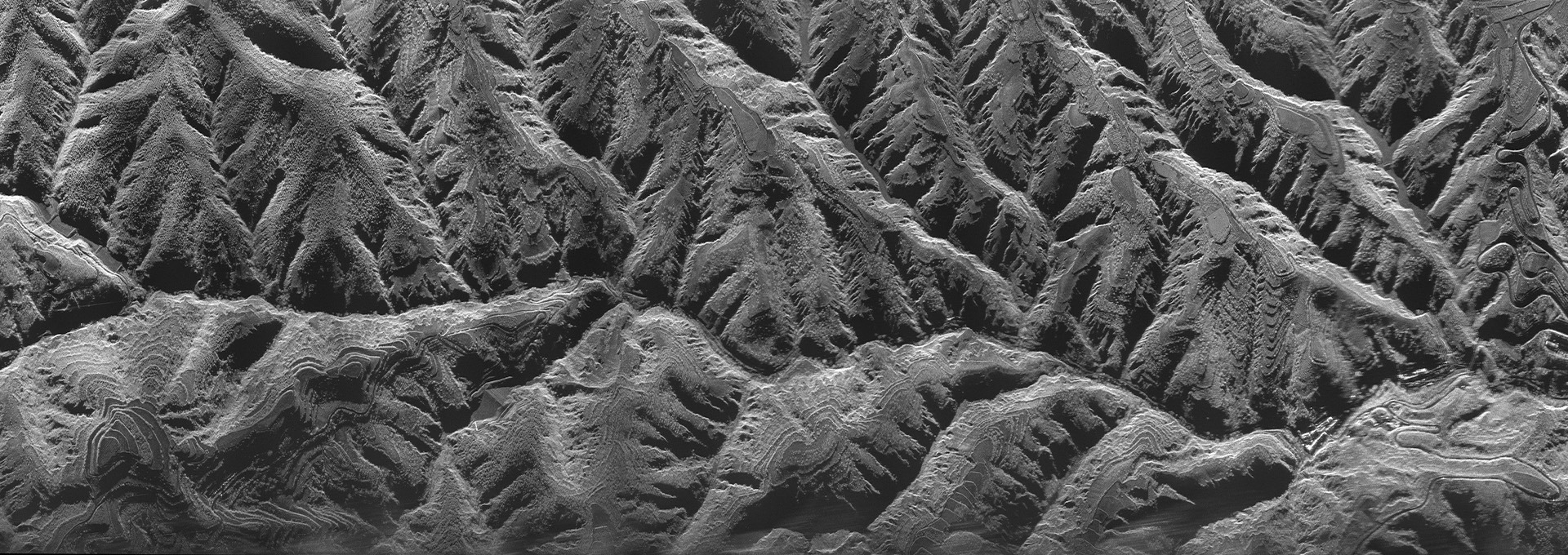
Radar interferometry technology:Synthetic aperture radar (SAR) uses satellites or aircraft to repeatedly image the same area, and by utilizing the phase difference between the two echo signals, it can accurately measure the small deformations of the surface in the direction of the radar line of sight during the two imaging periods. This is differential interferometric SAR technology.
L-band radarL-band radar is widely used in various fields such as military, civilian remote sensing, aviation and maritime, meteorology, etc. due to its core characteristics of strong remote detection, good anti-interference, excellent penetration, and all-weather adaptability.
2、 Special advantages of L-band
Strong penetrability:The wavelength is relatively long (15-30 centimeters), with good penetration ability for vegetation canopy and dry surface cover layer, and can detect deformation signals under slight vegetation cover or surface soil.
Weak coherence:Compared to the shorter wavelength C/X band, the L-band signal has a stronger ability to maintain coherence over longer time intervals, making it suitable for long-term analysis. This is crucial for monitoring early signs of slow developing leaks or evaluating long-term effects.
Sensitive to soil moisture:Leakage can lead to a significant increase in soil moisture content, and changes in soil dielectric constant can significantly affect the backscatter signal of L-band radar, which is itself a leakage indicator signal.
 |
 |
3、 Application advantages
Wide area coverage and efficiency:A single scan can cover hundreds of kilometers of pipelines, especially suitable for areas that are difficult to reach manually such as deserts, permafrost, and mountainous areas, achieving a leap in monitoring from "line" to "surface".
High sensitivity and foresight:Being able to detect millimeter level deformation may reveal hidden dangers of slow underground development (such as small leaks and soil loosening) before major accidents are caused by leaks or obvious signs appear on the surface.
All day, all day:Not affected by light and cloud rain, it can image at night and provide stable and continuous data flow.
Historical retrospective ability:The archived data can be used for retrospective analysis, investigation of historical leakage events, or assessment of long-term geological hazard risks along the pipeline (such as landslides and subsidence affecting the pipeline)